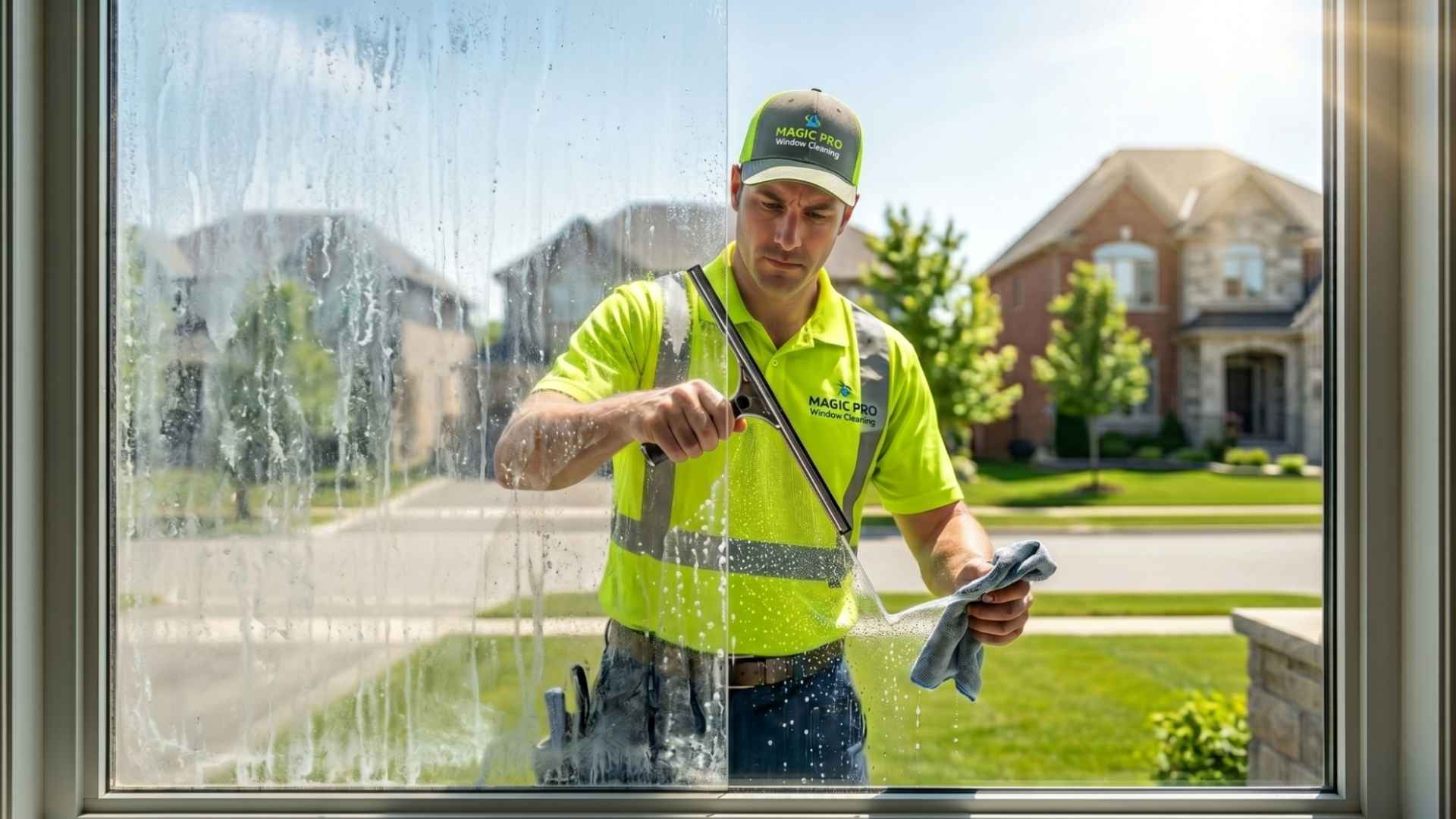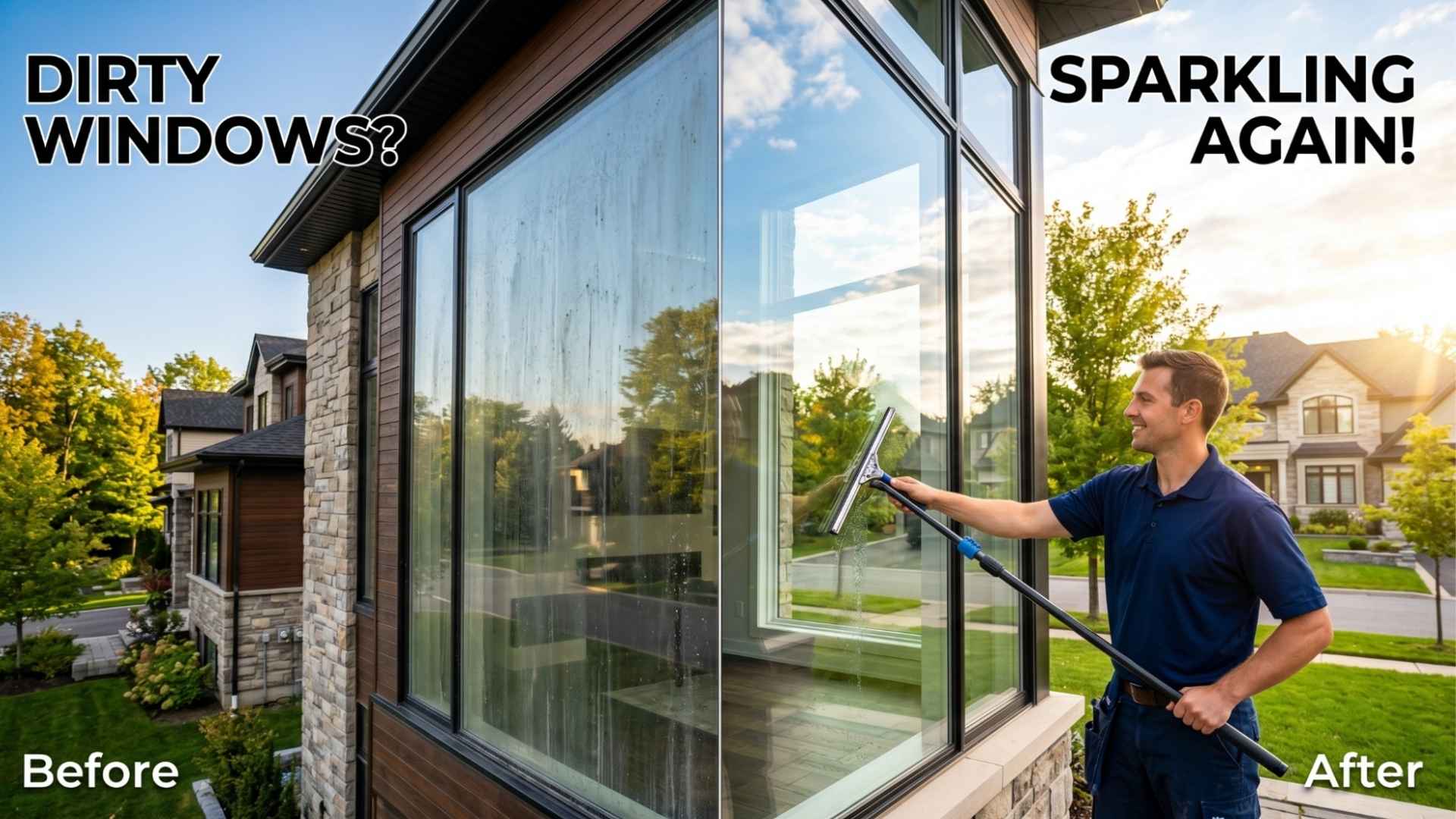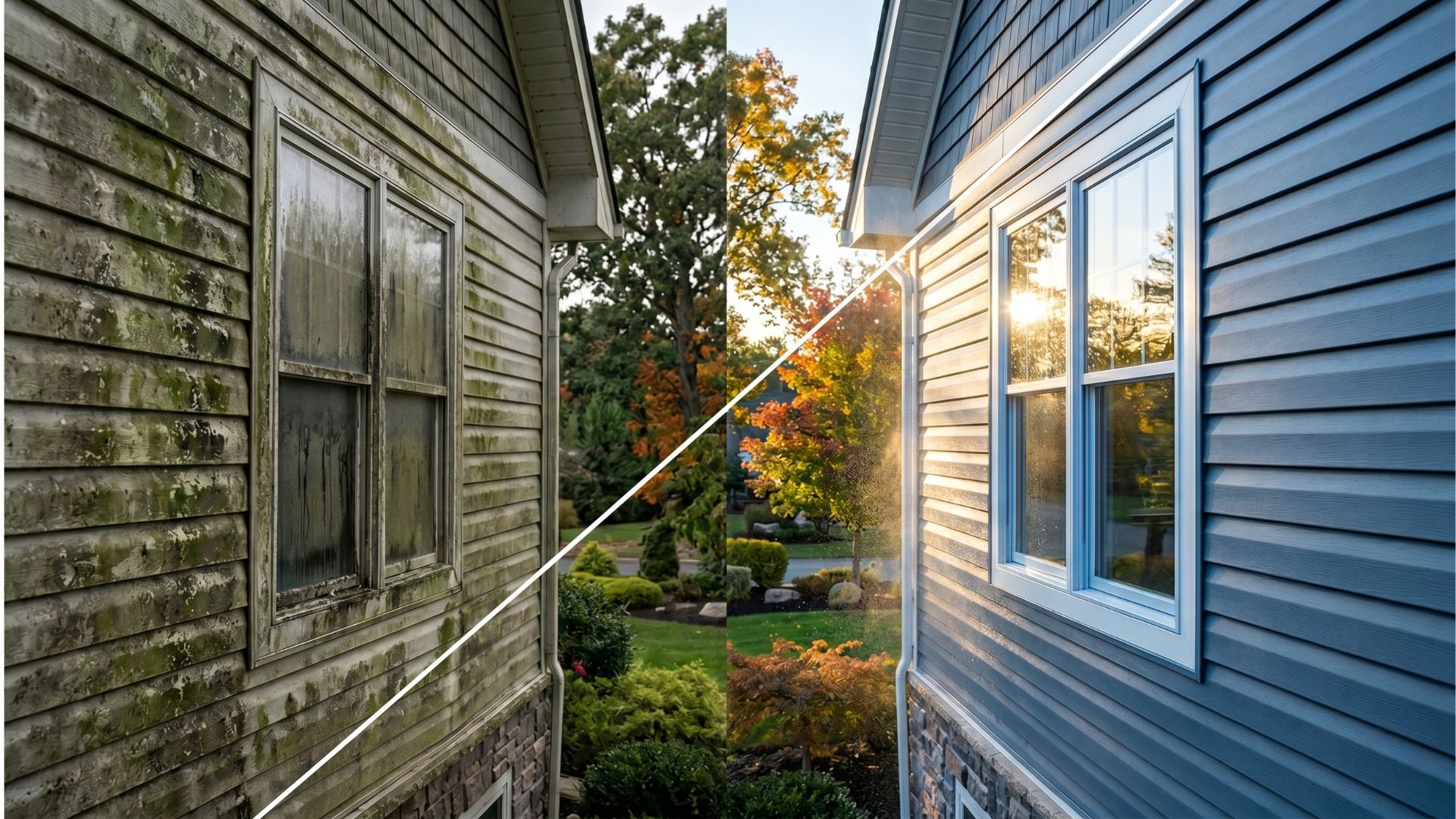

Windows often look cloudy after a wash due to leftover detergent residue, dirty cleaning cloths, or washing in direct sunlight. If you are asking yourself, “Why are my windows streaky?” These common window cleaning mistakes combined with Ottawa’s humid, dust-filled climate are usually to blame for the film on your glass.

Understanding Why Are My Windows Streaky
Many Ottawa homeowners ask, “Why are my windows streaky?” after completing their chores. This happens because washing agents react chemically with existing atmospheric dust, bonding to the glass pane rather than rinsing away.
Common Causes of Streaky Windows After Cleaning
Experiencing streaky windows after cleaning is often a result of using mineral-rich municipal tap water or leaving soap behind. When a surfactant cleaning solution is not fully removed, it dries into a thin film. This residue acts like a static magnet for environmental pollutants, making your home’s glass look cloudy.
Quick fix
Swap municipal tap water for distilled water when making a DIY cleaning solution. Ottawa’s tap water contains dissolved calcium and magnesium that dry as white mineral deposits on glass. Distilled water eliminates this entirely, and you can find it at most grocery stores for under two dollars per jug.
Ottawa Climate and Window Streak Problems
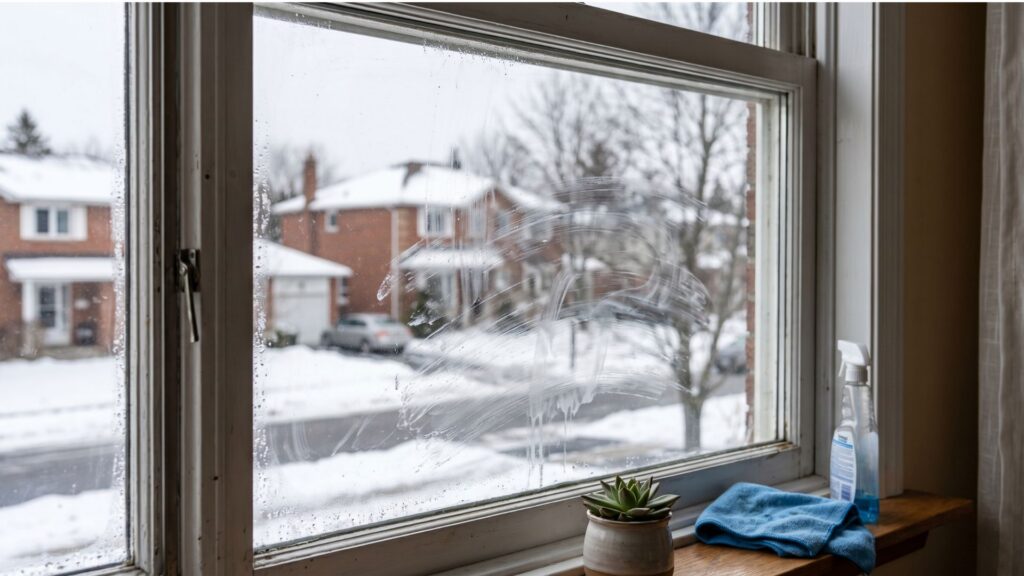
Our local geography plays a major role in creating common causes of cloudy or streaky windows. Ottawa properties, especially those near the Ottawa River or high-traffic areas in Nepean and Kanata, face high summer humidity that slows down evaporation, alongside wind-blown dirt that sticks to wet glass.
Temperature Swings and Pollen
Eastern Ontario’s severe temperature swings cause window glass to expand and contract, trapping microscopic silica particles. During spring, heavy pine and birch pollen coats local homes. When light rain hits this pollen, it creates a sticky, organic paste that is difficult to wash without leaving smear marks.
Ottawa-specific warning
Do not clean exterior windows on windy days in May or June. Ottawa’s birch and pine pollen season is heavy during these months. Wind carries fresh pollen onto wet glass faster than you can squeegee it off, meaning your glass will streak no matter how good your technique is. Wait for a still, overcast day.
Common DIY Window Cleaning Mistakes to Avoid
Many residents make critical window cleaning mistakes without realizing it. Relying on outdated household hacks, poor timing, or low-grade equipment will compromise your results. Learning to avoid these common errors is the first step to achieving professional-grade clarity.
Critical Window Cleaning Mistakes with Tools and Chemicals
The materials you select directly determine the clarity of your windows. Relying on improper supplies explains why you end up asking, “Why are my windows streaky?” after a DIY wash. Certain chemicals and fabrics are simply not designed to clean glass surfaces without leaving residue.
Using the Wrong Window Cleaning Tools
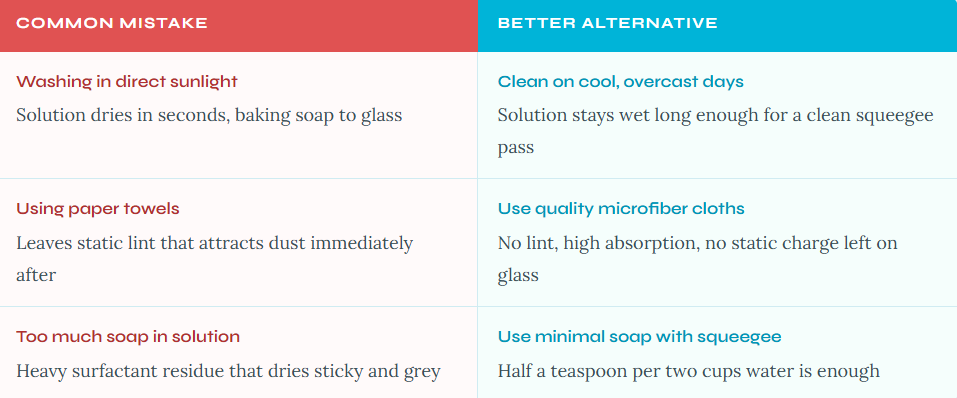
Using the right window cleaning tools is essential for a professional finish. Traditional paper towels and old cotton shirts leave behind fine lint and static charges that pull dust. Professional technicians instead use premium squeegees with sharp rubber blades and lint-free microfiber cloths to capture dirt.
Never do this with microfiber cloths
Do not wash microfiber cloths with fabric softener. According to professional window cleaners, softener coats the fibers and renders them unable to absorb moisture, meaning they will smear rather than clean. Wash microfiber with plain detergent only and never put them in a hot dryer.
Using Too Much Cleaning Solution
Applying excessive detergent creates a heavy chemical buildup. This soap residue is a primary answer to the question: why are my windows streaky? The excess surfactants dry into a sticky layer that attracts pollen, dirt, and airborne exhaust particles in busy urban areas.
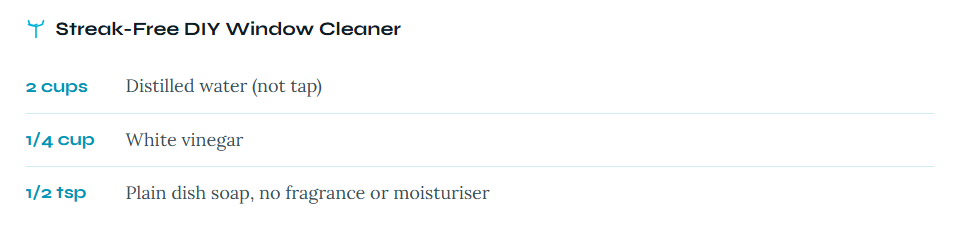
DIY solution recipe that actually works
Here is the proportion professional cleaners recommend for a streak-free homemade solution:
Environmental and Timing Errors
Even with high-end tools, washing glass in the wrong weather conditions will yield poor results. Solar heat and high winds evaporate water rapidly, leaving you with dried soap deposits before you have a chance to wipe the surface dry.
Cleaning Windows in Direct Sunlight
Washing glass under direct sunlight is a major error. The sun heats the glass, causing the cleaning solution to dry in seconds. This fast evaporation bakes the soap onto the glass, leaving you with the exact dilemma: why are my windows streaky after cleaning?

Ignoring Window Frames and Tracks
Cleaning only the glass pane while ignoring the surrounding frame is a common mistake. Rainwater will wash dirt, dust, and spider webs from dirty frames and tracks back onto the clean glass. Wiping the window sash, frame, and sill first prevents this dirty runoff.
Choosing the Best Weather Conditions for Window Cleaning
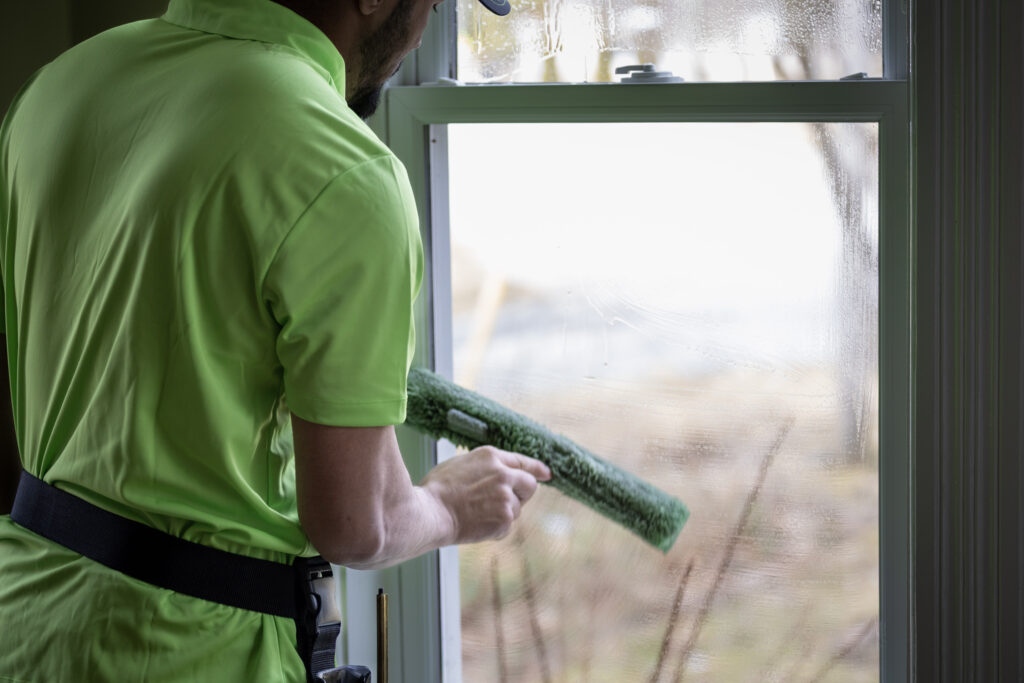
For pristine results, you must choose the best weather conditions for window cleaning. Overcast, cool, and windless days in Ottawa are ideal. This allows your cleaning solution to remain wet on the glass, giving you enough time to squeegee it off cleanly.
Hard Water Spots on Glass vs. Standard Streaks
It is crucial to distinguish standard streaks from hard water spots on glass. While soap residue causes streaks, hard water spots are mineral deposits (calcium and magnesium) from sprinklers. These minerals bond chemically with the glass pores and require acidic cleaners to dissolve.
Hard water spots vs. streaks: key difference
If white marks remain after you clean with a standard solution, you are dealing with hard water mineral deposits, not soap streaks. Do not keep scrubbing with glass cleaner as it will not dissolve them. Use a 50/50 mix of white vinegar and distilled water, let it sit on the glass for two to three minutes, then wipe clean with a microfiber cloth. For severe itching built up over multiple seasons, call a professional before the glass is permanently damaged.
How to Prevent Streaks on Windows: Actionable Prevention Guide
Knowing how to prevent streaks on windows is simple. Wash on overcast days, use distilled water instead of hard tap water, and avoid fabric softeners when washing microfiber cloths. Applying these Ottawa window cleaning tips will ensure a streak-free, professional shine.
Why Professional Window Cleaning Services Make a Difference
If you still find yourself asking, “Why are my windows streaky?” It is time for professional help. According to the Government of Canada Indoor Air Contaminants Guide, Canadians spend roughly 90% of their time indoors, making clean window frames vital for healthy air. We suggest booking professional window cleaning services Ottawa from Magicpro to ensure spotless, lasting results.
FAQs About Streaky Windows
Why are my windows streaky after cleaning?
Soap residue, dirty clothes, or washing under hot sun bakes the cleaner onto the glass before you can dry it.
What causes streaks on windows?
Soap buildup, hard water minerals, dirty squeegees, and paper towel lint are the primary causes of streaky home glass.
Can weather affect window cleaning results?
Yes, direct sunlight and strong winds dry the solution too quickly, leaving stubborn soap residues.
How do I remove hard water spots from glass?
Mix equal parts vinegar and distilled water to dissolve mineral deposits, then wipe clean with microfiber.
What is the best way to clean windows without streaks?
Use distilled water, a squeegee, and clean microfiber cloths on a cool, cloudy day.
Final Thoughts on Streak-Free Ottawa Glass
Clean glass requires the right tools, proper solutions, and correct timing. The streaking problem is almost never about effort; it is about technique and conditions. Apply distilled water, clean frames first, squeegee rather than wipe, and always choose an overcast day. If DIY cleaning still leaves streaks after following all of these steps, the glass may have accumulated hard water etching or salt damage that needs a professional treatment to restore properly. Contact Magicpro Window Cleaning to hire local Ottawa experts today.