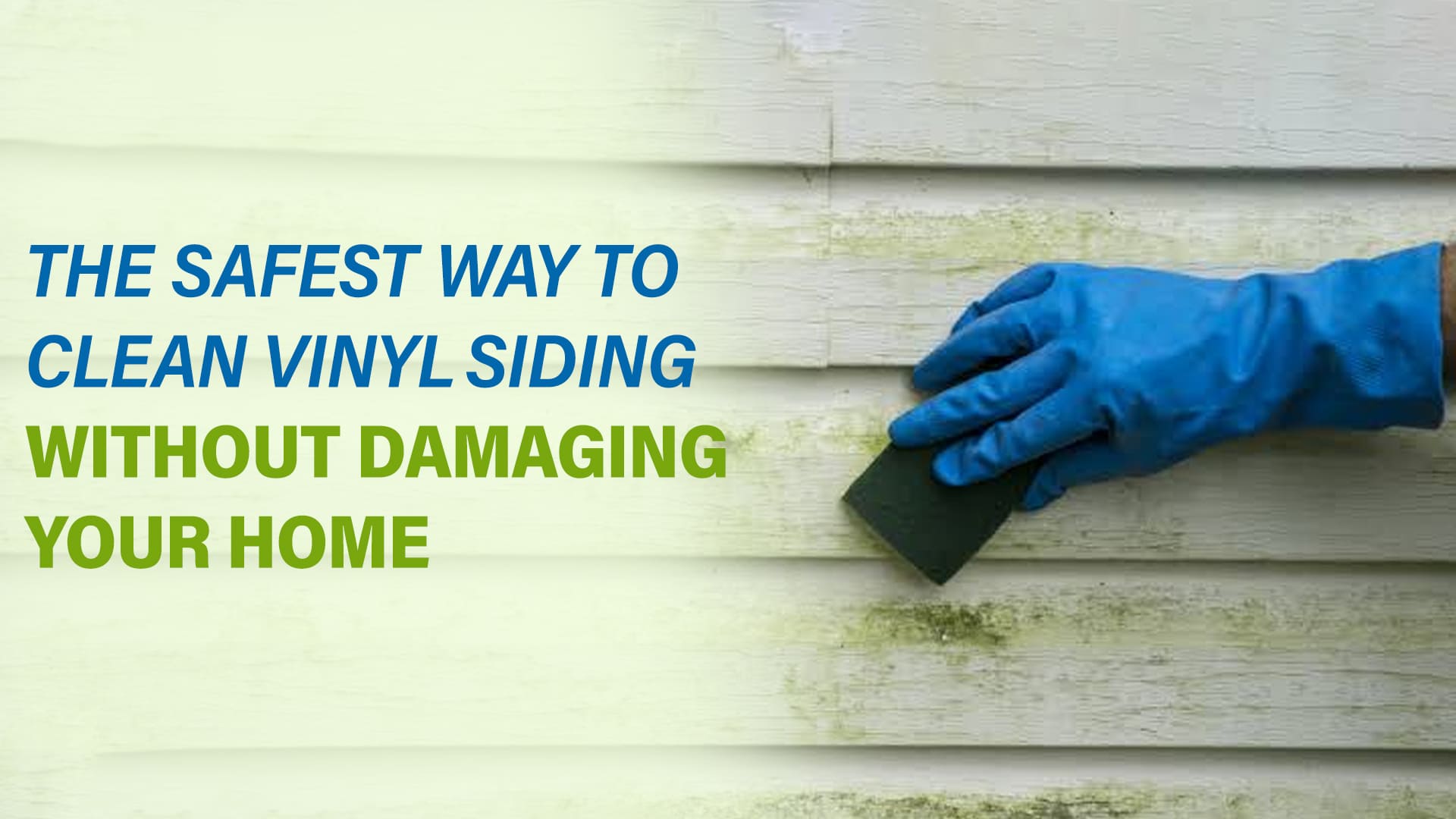
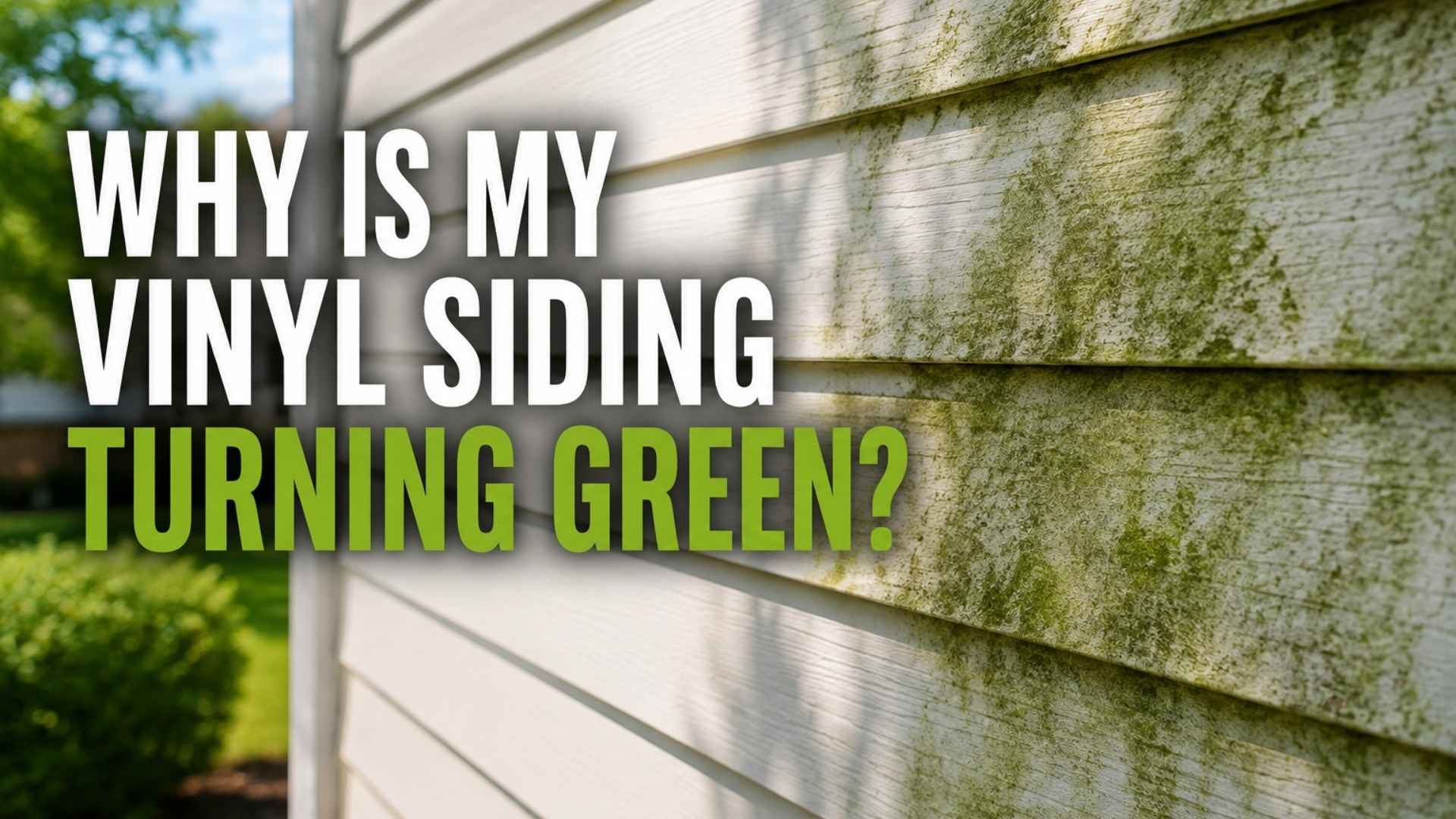
Green discoloration on exterior walls is a frustrating sight for property owners across Ottawa neighbourhoods like Kanata, Nepean, and Orleans. Finding organic film along exterior siding usually signals environmental moisture reacting with atmospheric dust and pollen. Restoring curb appeal requires identifying whether you are dealing with living organisms or simple dirt accumulation before applying surface treatments.
Quick Answer: Why Vinyl Siding Turns Green
Green mold on vinyl siding is typically caused by green algae, fungal mold, or mildew thriving on organic debris combined with exterior moisture. In Ottawa, high summer humidity, tree shade, and frequent rainfall create ideal microclimates for these organisms to colonize PVC siding panels. Prompt surface assessment and low-pressure cleaning prevent permanent siding discoloration and structural moisture retention.
What Causes Green Mold on Vinyl Siding?
Climate Factors in the Ottawa Region
Atmospheric Moisture and Rainfall
Ottawa’s humid summer climate brings sustained atmospheric moisture, particularly for homes near the Ottawa River and Rideau Canal. When rain or heavy dew hits shaded siding, moisture evaporates slowly, allowing airborne fungal spores and cyanobacteria to attach and multiply on vinyl cladding.
Shaded Microclimates
North-facing walls and sections beneath mature tree canopies receive minimal direct sunlight. Solar UV rays naturally retard fungal expansion. Without sufficient solar drying, damp vinyl panels remain prime breeding grounds for green mold on vinyl siding.
Dust and Organic Debris
Windborne dust, tree pollen, sap, and falling leaves settle into the textured grain of vinyl panels. This organic layer acts as a nutrient substrate for algae and mold spores, giving them everything they need to establish and spread.
Poor Drainage and Roof Runoff
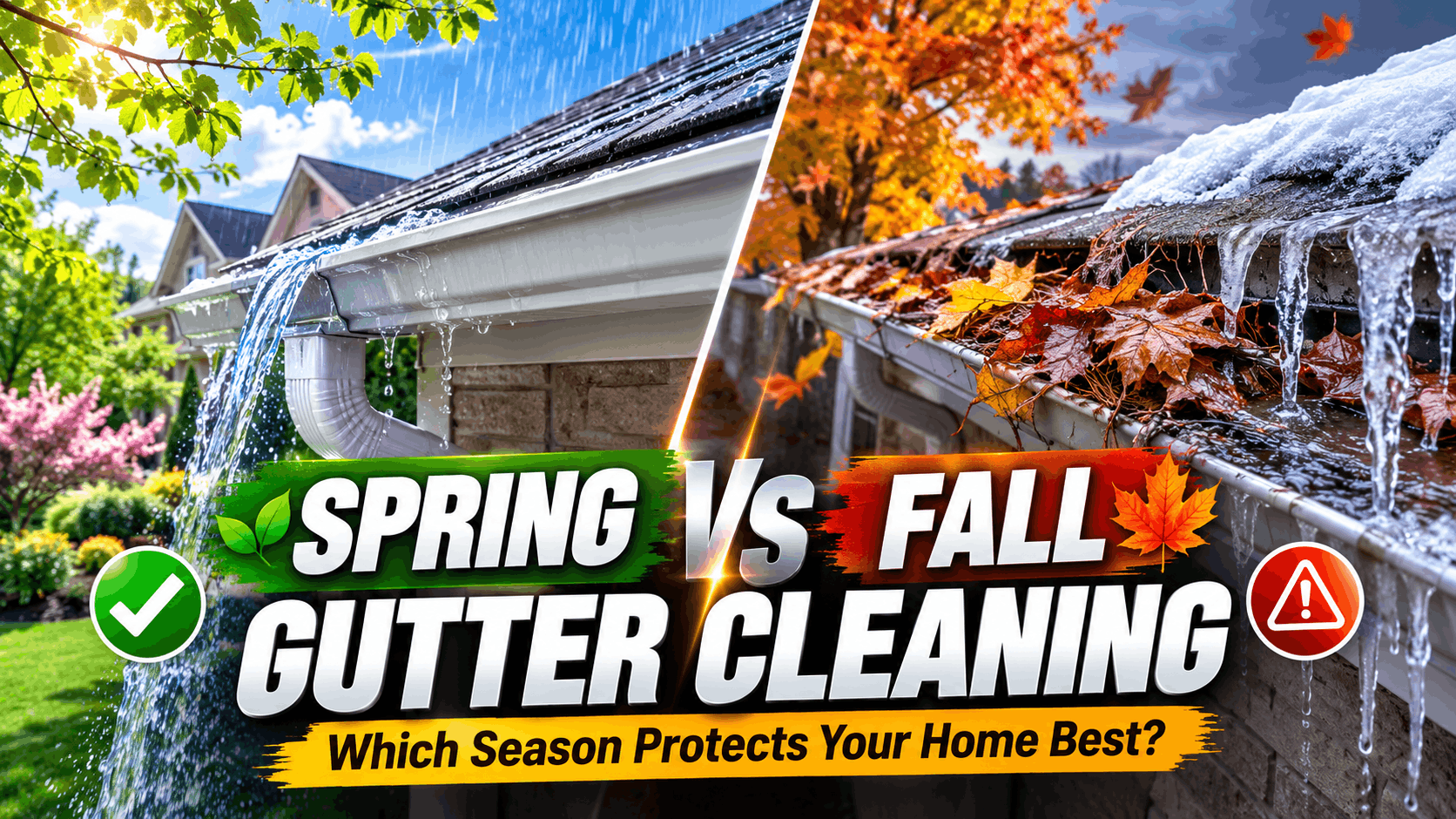
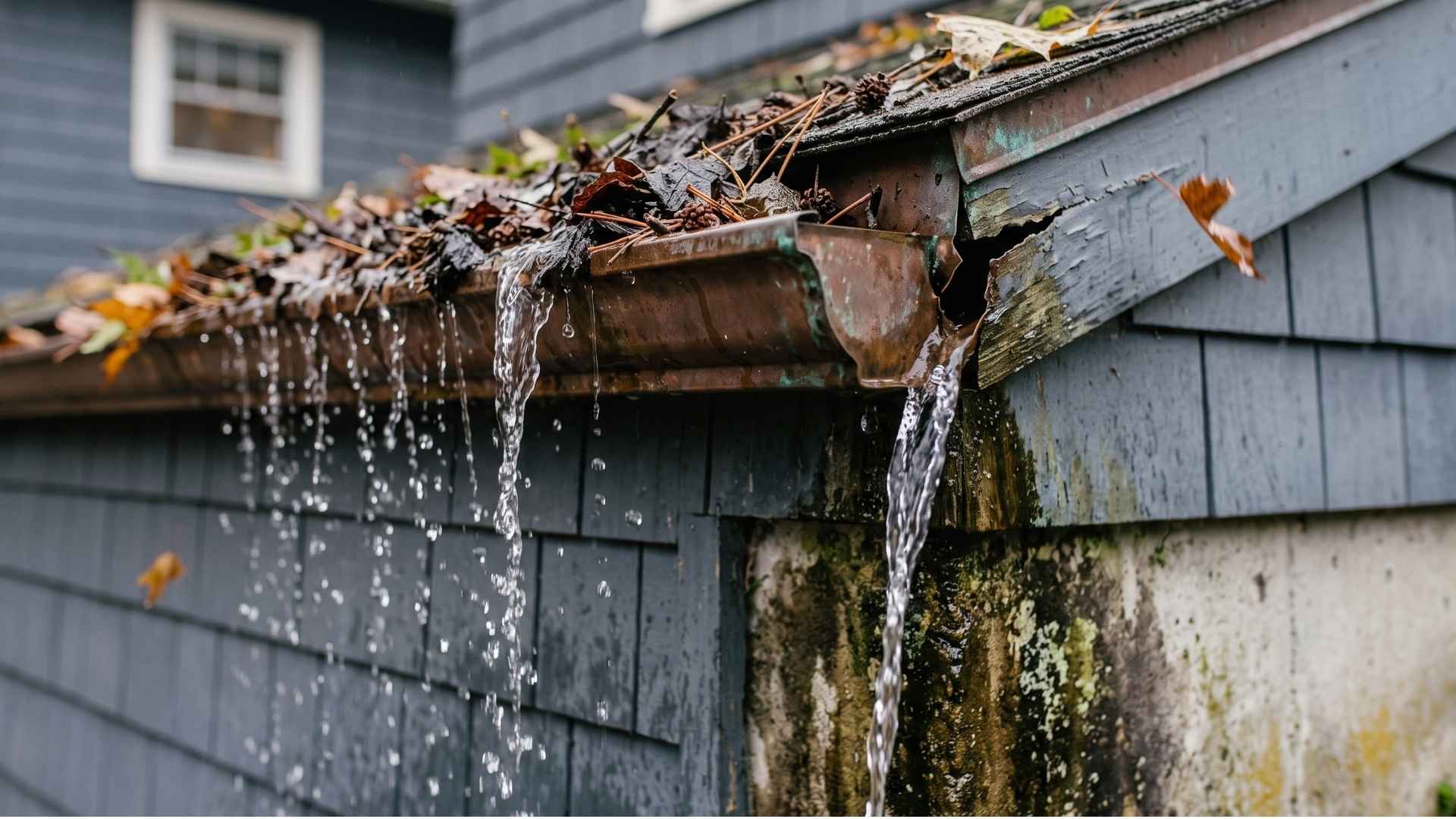
Leaking gutters, misdirected downspouts, and unclipped tree branches drop excess water directly onto exterior walls. According to Health Canada, managing external moisture sources is essential for preventing mold propagation around residential structures.
💡 Walk Your Perimeter
Take five minutes each spring to walk the outside of your home and note which walls have standing moisture, which sections sit under tree canopy, and where your downspouts are directing water. That single inspection reveals where your siding is most vulnerable and tells you exactly where to focus your annual cleaning.
Green Mold vs. Green Algae on Vinyl Siding
Distinguishing Between Exterior Organisms
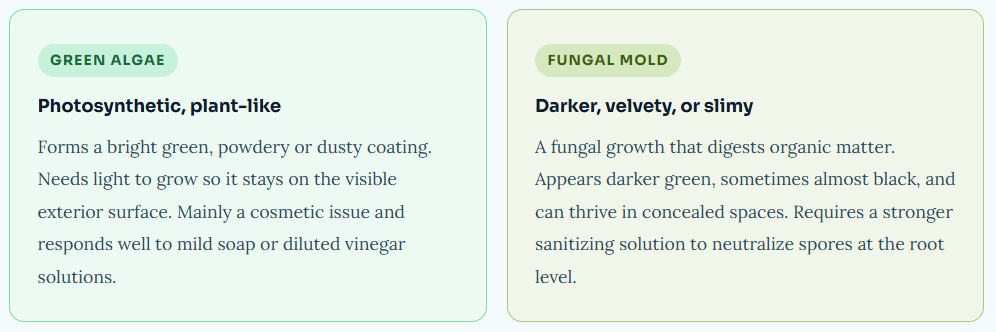
Knowing which organism you are dealing with changes both your cleaning approach and your urgency. They look similar from a distance but behave very differently up close.
7 Signs Your Vinyl Siding Needs Cleaning
Key Indicators of Organic Buildup
Recognizing exterior contamination early prevents permanent surface staining. Look for these specific signs when inspecting your siding each season.
- Bright green or yellowish powdery coatings along north-facing walls.
- Dark green or black speckled spots near soffit joins.
- A slimy texture on the panel surface during damp morning weather.
- Vertical dark streaking beneath overflowing or leaking gutters.
- Grime trapped and visible in the panel interlocking lips on close inspection.
- Stubborn stains reappearing within weeks after rainstorms.
- A dusty organic film visible when a light shines at an angle across the wall.
How to Remove Mold From Vinyl Siding Safely
Safe DIY Cleaning Steps
Step 1: Inspection and Landscape Protection
Inspect vinyl panels for cracks or loose seams. Cover garden beds, shrubs, and outdoor electrical outlets with plastic drop cloths to protect landscaping from cleaning solution runoff.
Step 2: Solution Application and Gentle Agitation
Apply a mild detergent or diluted sodium hypochlorite cleaner using a soft-bristle extension brush. Work in manageable sections, avoiding harsh chemical mixtures like bleach combined with ammonia, which release toxic fumes.
Step 3: Thorough Low-Pressure Rinsing
Rinse thoroughly with a garden hose from top to bottom at a downward angle to avoid driving water behind the panels.
⚠ Never Mix These
Bleach combined with ammonia-based cleaners releases chloramine gas, which is toxic in enclosed or semi-enclosed outdoor spaces. Always check that your detergent is ammonia-free before adding any bleach to the cleaning solution. If in doubt, use a purpose-made vinyl siding cleaner rather than DIY mixing.
What Is the Best Way to Wash Vinyl Siding?
Comparing Cleaning Methods
| Method | Best Suitable For | Key Consideration | Verdict |
| Garden Hose and Brush | Light dust and fresh algae | Requires manual effort and limited reach | Safe |
| Low-Pressure Spray | Moderate seasonal buildup | Requires mild surfactant for cleaning | Safe |
| Soft Washing | Heavy green mold and multi-storey siding | Neutralizes spores using low pressure under 300 PSI | Best Option |
| High-Pressure Washing | Hard masonry and concrete only | Risk of cracking vinyl and forcing water into wall cavities | Avoid on Vinyl |
Risks of High-Pressure Washing
Using high pressure on vinyl siding forces water past lap joints into exterior wall cavities, rotting underlying plywood sheathing. Reviewing soft washing vs pressure washing explains why low-pressure chemical sanitization is superior for delicate home cladding.
Is Soft Washing Safe for Vinyl Siding?
How Soft Washing Protects Siding
Soft washing uses gentle water pressure under 300 PSI paired with eco-friendly cleaning agents. This process kills mold spores and algae at the root level without warping vinyl panels or breaking seam seals. Unlike pressure washing, which simply blasts the visible growth off the surface, soft washing chemically neutralizes the organism so regrowth takes significantly longer.
How to Prevent Mold and Algae on Vinyl Siding
Practical Prevention Tips
Homeowners can prevent recurring growth by addressing the root conditions that let organisms establish in the first place. Cleaning removes what is already there. Prevention reduces how quickly it comes back.
- Keep gutters clear so water discharges through downspouts rather than running down siding.
- Trim tree foliage to maintain at least three feet of clearance from exterior walls.
- Redirect lawn sprinklers so they do not spray siding directly.
- Inspect siding annually and clean any early-stage growth before it establishes.
When to Call a Professional for Green Vinyl Siding
Expert Siding Cleaning in Ottawa
For multi-storey houses, steep gables, or heavy mold infestations, professional cleaning ensures safety and complete spore removal. Scheduling professional Siding Cleaning Services in Ottawa from Magicpro guarantees expert soft washing without risking siding damage.
Frequently Asked Questions About Green Mold on Vinyl Siding
Why is my vinyl siding turning green?
Green siding is caused by algae, mold, or mildew growing on damp organic dust and pollen accumulated on vinyl surfaces. Shaded walls and poor drainage are the most common contributing factors in Ottawa.
Is green mold on vinyl siding dangerous?
Exterior mold degrades curb appeal and can release airborne spores near window openings if left unaddressed. It also traps moisture against the siding, which over time works into seams and behind trim.
Is the green buildup mold or algae?
Powdery bright green buildup is usually algae, while dark green or black velvety patches indicate mold growth. Algae needs light and stays on the surface. Mold can thrive in darker, concealed spaces behind trim or in seams.
Can I pressure wash green stains off vinyl siding?
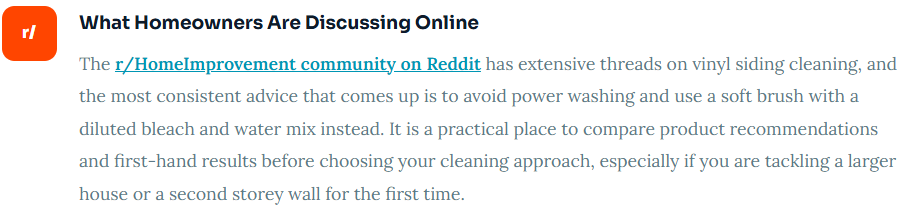
High pressure can crack vinyl and force water into wall cavities, rotting the underlying sheathing without any visible exterior sign. Low-pressure soft washing is the correct method for vinyl siding.
When should I hire professional siding cleaners?
Hire professionals for multi-storey walls, severe growth, elevated gables, or when DIY cleaning fails to prevent regrowth. Professional soft washing equipment reaches safely and neutralizes spores more effectively than garden-hose methods.
Protect Your Ottawa Home with Expert Exterior Care
Understanding what causes green mold on vinyl siding empowers homeowners to protect their home exterior before organic stains cause permanent discoloration. Combining proactive moisture management with gentle washing techniques keeps your siding clean and durable. Partnering with Magicpro for professional care ensures your home stays protected against Ottawa climate challenges year-round.