Maintaining exterior cleanliness boosts curb appeal for property owners across Ottawa communities like Kanata, Orleans, Nepean, and Barrhaven. Many homeowners search for a practical pressure washing guide to restore driveways, decks, and siding without causing costly property damage. While pressurized water strips away years of accumulated grime, moss, and weather stains, improper handling can carve deep grooves into wood or crack delicate exterior cladding. Learning safe pressure washing tips ensures your outdoor surfaces stay clean, vibrant, and structurally sound.
What Is Pressure Washing and How Does It Work?
Pressure washing utilizes a motorized pump to force water through a narrow spray nozzle at high velocity. Unlike standard garden hoses, which deliver roughly 40 PSI, a home pressure washer generates 1500 to 3000 PSI of kinetic cleaning force. Cleaning efficiency depends on balancing water pressure (PSI), water volume (GPM), spray angle, and physical wand distance from exterior surfaces.
40
PSI from a standard garden hose
1,500+
PSI from a typical home pressure washer
30x
More water force than a garden hose
Pressure Washing Safety Tips Every Homeowner Should Know
Operating high-pressure equipment demands strict attention to personal safety and property preservation. Always wear impact-resistant eye protection, long pants, and sturdy non-slip footwear. Never direct the spray wand toward people, pets, or electrical fixtures. Because spray gun kickback can unbalance operators on elevated platforms, avoid working on ladders. Reviewing official CCOHS safety guidelines reinforces the importance of checking high-pressure hoses and electrical connections before starting any exterior home cleaning task.
⚠ Check your hose fittings before every session.
A cracked or loose high-pressure hose fitting can whip violently when pressurized. Run through the connections while the unit is off, then verify there are no leaks before pointing the wand at any surface.
How to Choose the Right Pressure Washer Settings
Selecting appropriate equipment settings prevents surface erosion while ensuring effective stain removal across varied outdoor materials.
Key Equipment Variables: PSI, GPM, and Distance
Water pressure measured in PSI determines impact force, whereas water flow rate in GPM flushes away loosened debris. Controlling wand distance serves as your primary safety valve; holding the spray tip 18 to 24 inches from target surfaces allows pressurized water to fan out safely.
Surface Cleaning Approach Matrix
| Exterior Surface | General Approach | Primary Risk Factor |
| Concrete & Pavers | Moderate to strong cleaning | Surface etching or spalling |
| Vinyl Siding | Low pressure with wide fan | Water intrusion behind panels |
| Wooden Decks | Controlled low pressure | Wood gouging and splintering |
| Brick & Masonry | Gentle rinsing with wide tip | Mortar joint degradation |
| Painted Finishes | Very low pressure rinsing | Paint stripping or peeling |
Pressure Washer Nozzle Selection Explained
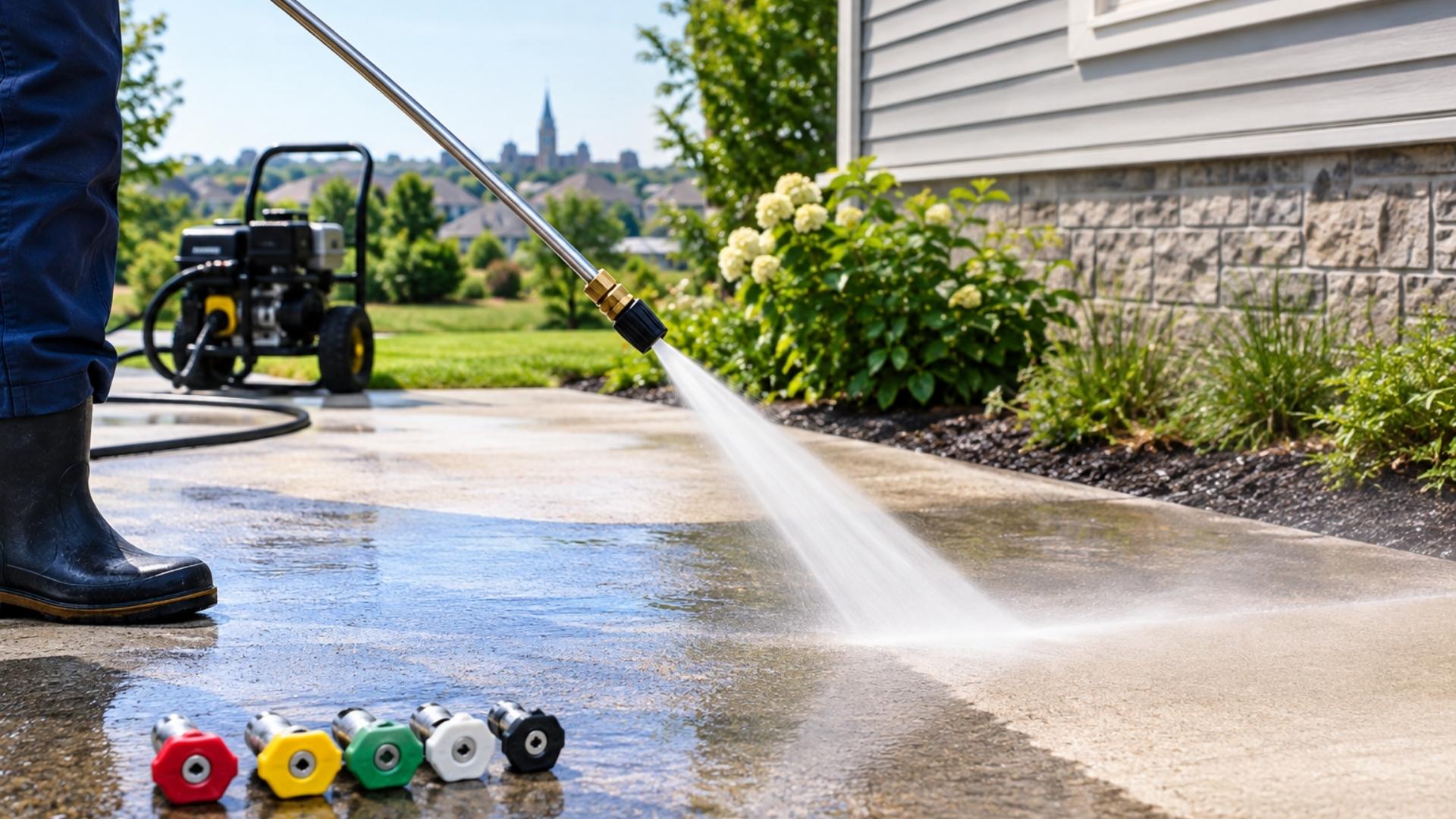
Pressure washer nozzle selection dictates spray fan width and concentrated kinetic force. Each colour corresponds to a specific spray angle and cleaning intensity.
Red – 0°
Pinpoint jet. Avoid for surfaces. Can gouge most materials.
Yellow – 15°
Tough concrete cleaning only. Not for wood or siding.
Green – 25°
General-purpose. Driveways, patios, hard surfaces.
White – 40°
Wide, gentle fan. Best for siding, windows, cars.
Black – Soap
Low pressure. Applies detergent before rinsing.
How to Pressure Wash Different Exterior Surfaces Safely
Exterior materials respond differently to hydraulic force, demanding tailored techniques for walls, flat work, and timber structures.
Exterior Wall Protection
Exterior walls guard interior living spaces against moisture penetration, requiring gentle washing angles and careful spray control.
Pressure Washing Siding Safely
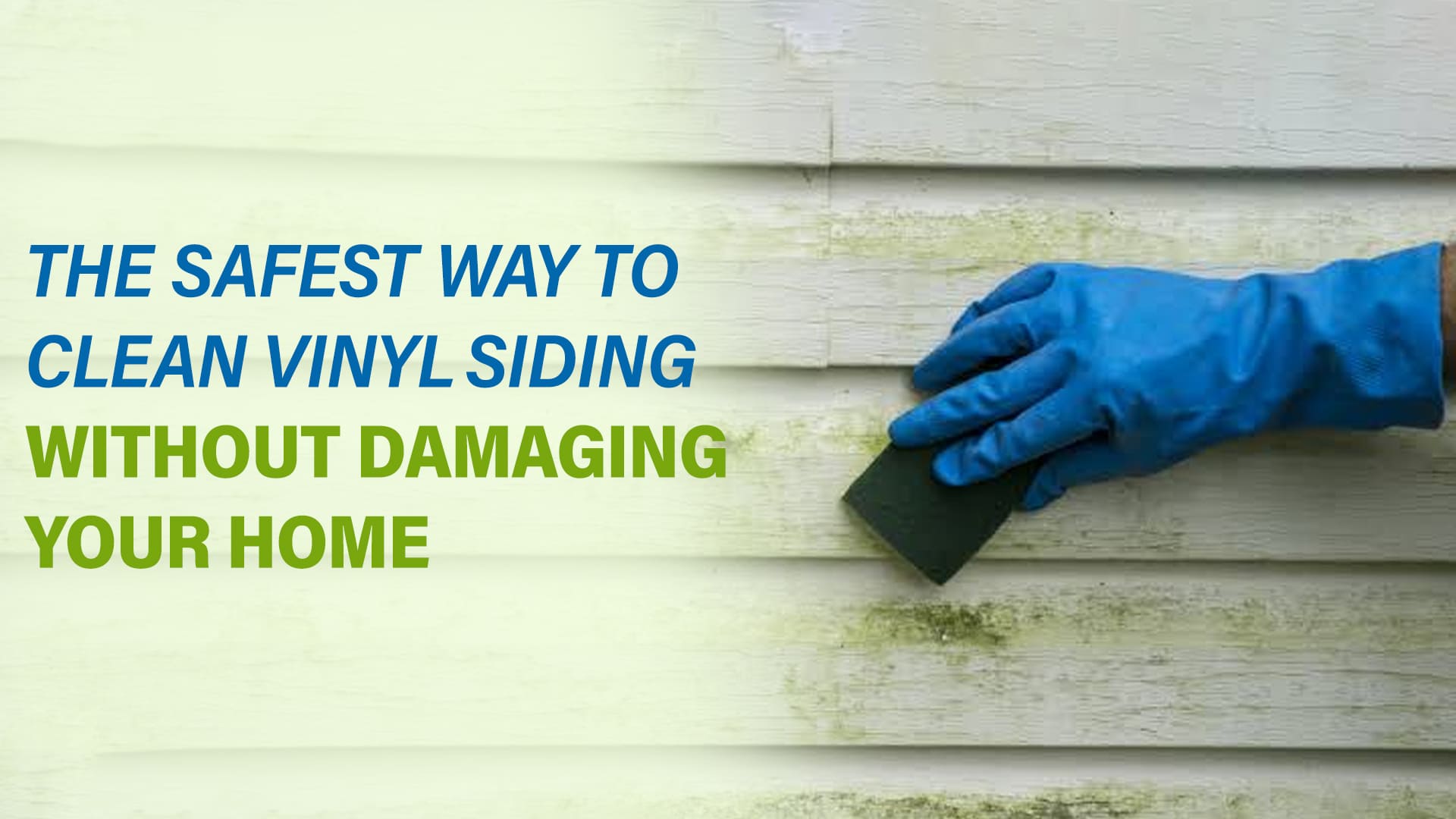
Practicing pressure washing siding safely requires directing spray wands slightly downward to avoid pushing water under horizontal lap joints. High pressure can crack brittle PVC panels or saturate insulation layers. Homeowners seeking detail on panel protection can learn how to clean vinyl siding safely using proper detergent application and low-pressure rinsing.
Cleaning Brick and Masonry
Weathered brickwork and mortar joints deteriorate under concentrated water streams. Use wide 40-degree spray tips, maintain generous wand distance, and inspect mortar integrity before washing historic Ottawa brick homes.
Flat Ground and Wooden Structures
Patios, driveways, and timber decks gather heavy foot traffic stains, algae, and ground grime that require dedicated cleaning methods.
Cleaning Concrete and Driveways
Cleaning concrete and driveways effectively involves sweeping loose debris, applying suitable oil degreasers, and moving the spray wand in overlapping sweeping motions. Avoid holding the tip stationary over hairline concrete cracks.
Pressure Washing Decks and Patios
When undertaking pressure washing decks and patios, soft cedar and pressure-treated pine gouge easily under high pressure. Always spray in line with the wood grain using low pressure to preserve natural wood fibers.
Soft Washing vs Pressure Washing
Comparing soft washing vs pressure washing highlights how cleaning methods differ across exterior surfaces. High-pressure washing relies on kinetic force to dislodge dirt, whereas soft washing uses gentle low pressure combined with specialized eco-friendly cleaning detergents. Soft washing safely sanitizes delicate exterior finishes, eliminating mold spores without risking mechanical surface damage.
When Should You Hire Professional Pressure Washing Services?
While simple patio rinsing is manageable for DIY enthusiasts, multi-storey home exteriors, steep rooflines, and delicate stucco demand specialized equipment. Hiring professional Pressure Washing Services in Ottawa ensures trained technicians select correct PSI levels, apply safe cleaning solutions, and complete exterior home cleaning efficiently.
A Simple Pressure Washing Checklist for Homeowners
Before You Start
During Operation
After Washing
Frequently Asked Questions
Is pressure washing safe for all exterior surfaces?
No. High water pressure can gouge wood timber, crack vinyl cladding, chip paint, and erode masonry mortar. Delicate materials require soft washing. Always match the method to the material.
What is the difference between soft washing and pressure washing?
Pressure washing uses high kinetic water force to strip grime, while soft washing relies on low water pressure and eco-friendly cleaning solutions to kill algae safely. Soft washing is the correct approach for roofs, painted wood, and any surface that cannot tolerate mechanical force.
Can pressure washing damage vinyl siding or wooden decks?
Yes. Excessive pressure easily splits brittle vinyl panels, forces water into interior walls, and carves permanent deep gouges into soft deck lumber. Always use the widest nozzle appropriate for the surface and keep the wand in constant motion.
What nozzle color should beginners use for exterior cleaning?
Beginners should start with white 40-degree nozzles for broad surface rinsing, or black soap nozzles for detergent application. Only test narrower tips after you are comfortable with how the equipment responds at wider settings.
When should I hire professional pressure washing services in Ottawa?
You should hire professionals for multi-storey houses, delicate surfaces like stucco or historic brick, heavy organic growth such as black algae on driveways, or when you want guaranteed damage-free soft washing results delivered by trained technicians.
Keep Your Exterior Surfaces Clean and Protected
Following this comprehensive pressure washing guide empowers Ottawa homeowners to maintain pristine exterior surfaces safely. By selecting suitable nozzle tips, controlling water pressure, and recognizing when soft washing is required, you protect your property against seasonal weathering. For complex residential projects across Ottawa, trust Magicpro to deliver safe, effective exterior cleaning solutions.